
 We are starting to get warm spells here in Michigan and that means only one thing in the southeast part of the state Detroit River Walleye Jigging!Every year at this time I hear guys starting to ask question on the forums about what line, rod ,and reel to use. Other popular thing is what jigs size and color. Should I use minnows or plastics. Also guys that are just starting out are trying to figure out how can they get better at this type of fishing.
So what I am going to do is cover every part of this season. The 1st thing we are going to start with is rod, reel, and line choices. I will also be getting local guides and pro thoughts and get some of their tips to landing a few more eyes this season.So lets dive right in here.
Rods
 If you have a limited amount of money this is the one place I would spend a bit more of your budget on. You want to use a short rod in the 5 to 6 foot range. This length helps keep the line close to the boat that way you can watch the line and keep it vertical(more on that in coming parts)A rod in Medium to Med-Heavy rod power with a fast to extra fast action, made of Graphite and nothing else. That way you’ll be able to feel what is going on down there. Like I stated in the “Fishing Rod Basics” nothing tops Graphite for sensitivity. A line rating around 8 -16 lb and lure weight up to 3/4 to 1 oz is what you want .There is a ton of great rods on the market that meet these needs. These are just a few:
Shimano Convergence CVS60MHA retails for $49.99
Fenwick HMX 60MH-F retails for $79.95
St. Croix Premier PS60MHF retails for $110.00
Grandt Rods American Pro 003A retails for $137.00
G Loomis IMX SJR723 (IMX) retails for $250.00
Reels
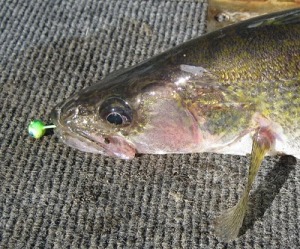 There is a few key things to look at in a good DR jigging reel. The 1st is Instant Anti-Reverse. Walleye have very hard mouths and can spit the jig in and out very quickly.Also you could be fishing water has deep has 40ft so you don’t want anything that will delay the hook going into the fish. The reel needs to have a good strong smooth drag system. You never know when the odd steelhead or sturgeon my take your jig. This is where a front drag will win out over a rear drag.Your fishing a no stretch line(more to come below) so the only place that has any give is your drag and a bit in the rod.The only advantage a rear drag has on a front drag is if you are fishing with gloves, it makes it easier adjust the drag.Most rear drag reels have a trigger, so they will not have instant anti-reverse.A line capacity of 80 to 140 yards of 8lb test. I tend to stick with two brands when it comes to reels Shimano and Daiwa. Both brand have great reels in all price points. Below are just a few.
Daiwa Crossfire®-3iB retails for $29.99
Shimano Solstace® FL retails for $39.99
Shimano Sedona® FD retails for $59.99
Daiwa Regal® XiA retails for $54.99
Daiwa Exceler-TSH™ retails for $109.99
Shimano Symetre®FJ retails for $99.99
Line
 With the line for this fishing you want a no stretch superline. These lines increase your sensitivity even more. It also increase your hook setting power. These lines have super small diameters when you compare them to a mono line with the same breaking strength. This thinner line helps you keep your light going straight vertical. It is best to use a line in a Hi-Vis color. The bright color helps you see if your line is vertical and it also helps you pick up on lifting bites. I prefer true braids Such has Power Pro or Suffix, but thermo fused superlines like fireline are very popular also. The line size I use most is the 15/4.That is 15lb test that is the same dia at 4lb mono. If you’re going to be tieing straight to the jig you may even want think about going down to the lighter lines that way you can break the line when the bait becomes snagged. It is important that you have a mono backing on your reels when fishing with superlines. These lines do not grip well to themselves so you can get some line slippage if you don’t. Also when tieing to your lure make sure you use the right knot I talked about this in an early article (see it here). I will talk more about attaching the line to the lure when we cover rigging and baits.
 Part two-Basic lures and rigging.
Photos courtesy of Michael Thompson

Trackbacks/Pingbacks